When apparel brands evaluate printing methods for their product line, the decision is rarely just about aesthetics. It impacts durability, production scalability, consistency across batches, and long-term brand reliability. This is where silk screen custom printing t-shirt and DTG (direct-to-garment) printing diverge significantly. For brands seeking a production partner that can handle both methods with high-quality control, Pinyang Clothing offers a full-package manufacturing system that covers every step from fabric sourcing to final inspection.
With a vertically integrated supply chain, advanced production lines, and strict quality control, Pinyang Clothing can support brands in choosing the best printing method based on design complexity, batch size, and long-term brand strategy. Below is a practical, end-to-end comparison designed for decision-makers, not just designers.
1. Batch Consistency and Production Stability: Why Silk Screen Still Leads
If you’re planning a collection with multiple sizes, color variants, and repeated prints, silk screen custom printing t-shirt remains the most reliable method. Once a screen is set up, it produces highly consistent prints across large quantities. This stability is critical when you’re scaling a brand and need the same print quality across batches.
Silk screen printing is especially advantageous when:
The design uses solid colors or heavy ink coverage
Consistency across thousands of units is required
High durability is expected after multiple washes
The print area is large or on dark fabrics
Pinyang Clothing’s integrated system ensures consistency in raw materials and production parameters. This means the ink behavior, color saturation, and print feel remain stable from the first unit to the last.
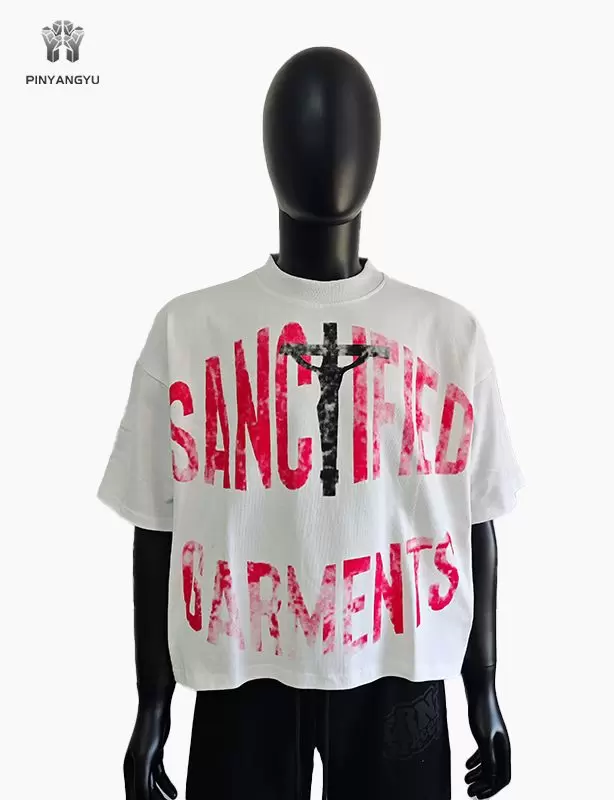
2. Design Flexibility and Detail: Where DTG Shines
DTG printing offers a near-unlimited design scope. It is ideal for complex images, gradients, and photorealistic graphics. For brands that update designs frequently or run small batch releases, DTG provides a fast and flexible path.
However, DTG’s performance depends heavily on fabric type and pre-treatment. It tends to work best on light-colored cotton and requires strict control to maintain consistent results.
DTG is best suited for:
Short-run or custom one-off designs
Highly detailed graphics and photo-quality prints
Frequent design changes and limited editions
Soft, lightweight fabric focus
Pinyang Clothing’s production capabilities allow brands to choose DTG when it makes sense, without sacrificing quality or delivery. The company’s full-package manufacturing also means DTG can be integrated into a broader production strategy.
3. Fabric Compatibility and Final Hand Feel: The Practical Impact
When it comes to customer experience, the hand feel of the print matters as much as the image. Silk screen printing often provides a more substantial print feel, especially on thicker fabrics, and performs consistently across cotton blends.
DTG prints tend to feel softer but can vary depending on fabric composition and print pre-treatment. Inconsistent fabric quality can lead to uneven saturation or reduced wash resistance.
Because Pinyang Clothing controls fabric sourcing and inspection, the company can ensure that both silk screen custom printing t-shirt and DTG prints deliver consistent hand feel and performance across production batches.
4. Production Efficiency and Supply Chain Control
For brands operating at scale, production speed is not only about printing. It involves pattern development, sampling, quality control, packaging, and logistics. Silk screen printing becomes highly efficient when you produce large volumes because setup costs are offset by rapid, stable output.
DTG is faster for small batches but requires continuous preparation for each design, which can slow down overall workflow if the brand has multiple designs or frequent changes.
Pinyang Clothing’s vertical integration supports efficient manufacturing workflows. With full-package production and 1-on-1 design consultation, brands can optimize production timelines and reduce risk.
5. Durability and Wash Performance: Why Silk Screen Is Often Preferred
Durability is one of the most critical factors for customer satisfaction. Silk screen prints typically retain color and adhesion longer due to thicker ink layers and stronger bonding with fabric fibers. This is especially important for apparel brands targeting repeat purchases and long-term reputation.
DTG can produce high-quality prints but requires strict process control. In the absence of consistent fabric and pre-treatment, DTG prints may fade faster or show uneven wear after repeated washing.
Pinyang Clothing’s quality control process ensures that both printing methods meet high standards, but silk screen custom printing t-shirt is still preferred for long-term durability and repeated-wash performance.
6. Cost Efficiency and Long-Term Strategy
For small orders or prototypes, DTG can be cost-effective because it requires minimal setup. But as order volume grows, the unit cost may increase and consistency may decline.
Silk screen printing, while requiring higher initial setup, becomes more cost-effective at scale and provides stable quality. For brands aiming for long-term growth, silk screen printing often delivers better ROI over time.
Pinyang Clothing’s scalable production capacity supports both small and large orders, allowing brands to plan for growth without compromising on quality.
7. Industry Data and Quality Standards
In the garment manufacturing industry, consistency and repeatability are essential for brand reputation. Research shows that products with stable quality and durable printing have higher customer satisfaction and repeat purchase rates. This aligns with industry standards for textile quality and inspection.
Pinyang Clothing’s commitment to strict quality control and vertical integration ensures consistent performance in both silk screen custom printing t-shirt and DTG printing processes. This makes it a reliable partner for brands seeking long-term production stability.
Conclusion
Choosing between silk screen custom printing t-shirt and DTG is not a one-size-fits-all decision. Silk screen printing is ideal for large batch production, high durability, and consistent color performance. DTG is best for short-run designs, photorealistic graphics, and rapid design iteration.
Pinyang Clothing’s full-package manufacturing and vertical supply chain control provide the flexibility brands need to choose the right printing method based on design needs, production scale, and long-term brand strategy. With strong manufacturing capacity, strict quality control, and a customer-oriented production model, Pinyang Clothing helps brands achieve consistent quality and reliable delivery across any printing method.
FAQ
Q1: When should I choose silk screen custom printing t-shirt over DTG?
A1: Choose silk screen printing when you need high consistency, large batch production, and durable prints that withstand repeated washing. It is also ideal for solid-color designs and dark fabrics.
Q2: Can DTG print be as durable as silk screen?
A2: DTG can achieve good durability when paired with high-quality fabric, proper pre-treatment, and strict process control. However, silk screen printing generally offers longer-lasting results for high-wear applications.
Q3: What is the minimum order size for silk screen printing?
A3: The minimum depends on design complexity and color count, but silk screen becomes cost-effective at larger volumes. Pinyang Clothing supports both small and large orders through scalable production.
Q4: How do I ensure consistent color across different batches?
A4: Consistency requires stable fabric sourcing, controlled ink mixing, and consistent production parameters. Pinyang Clothing’s vertical integration and quality inspection system help ensure batch-to-batch consistency.
Q5: Can I use both printing methods for the same collection?
A5: Yes. Brands often use silk screen printing for core designs and DTG for limited editions or complex graphics. Pinyang Clothing’s full-package manufacturing allows seamless integration of both methods.


 en
en




 Leave a Message