Surprising tricks from Pinyang Clothing for durable embroidery for hoodies
Mar. 03, 2026 Views:433
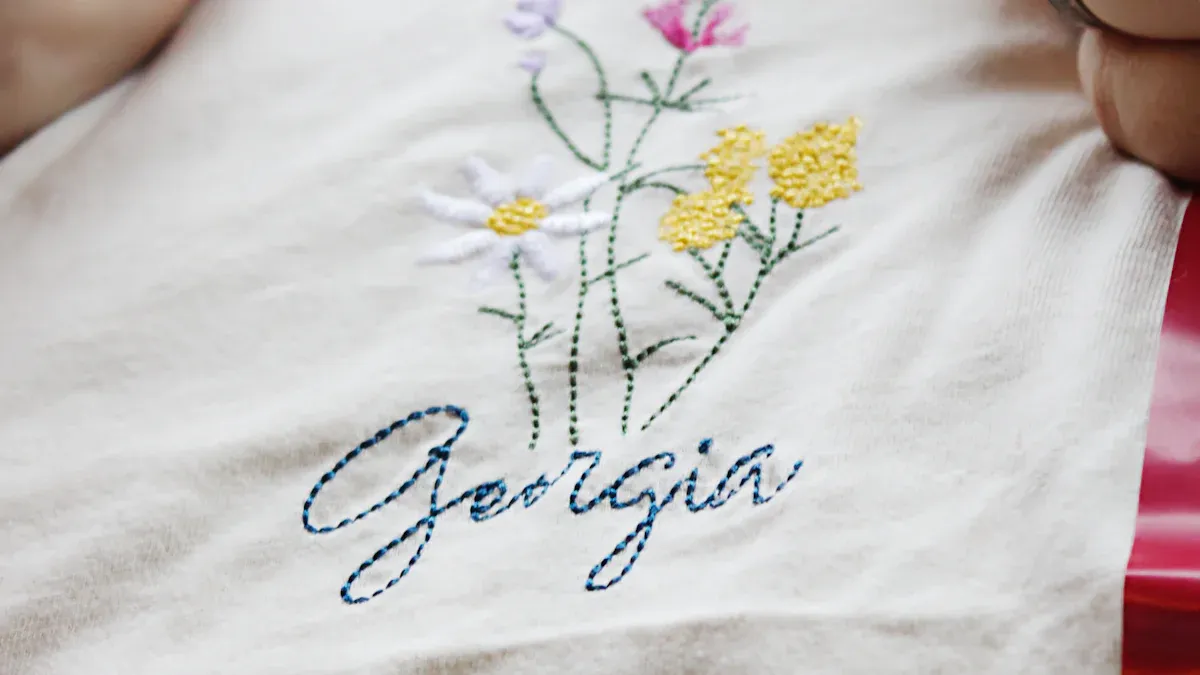
Pinyang Clothing’s experts emphasize the importance of durable embroidery for hoodies, recommending the use of reinforced stitches as their top trick for achieving strong and lasting designs. Their team believes that these robust stitches ensure that the embroidery can withstand numerous wears and washes without fading. Pinyang Clothing is renowned for its excellent quality control, quick order fulfillment, and easy customization options. Many customers return for more because they are thrilled with the results, with over 40% reordering, which demonstrates the effectiveness of their methods. These tips are beneficial for both beginners and experienced creators alike, allowing anyone to achieve embroidery that remains vibrant and intact.
Key Takeaways
Use strong stitches to make embroidery last longer on hoodies. This helps designs stay nice after many washes and wears.
Pick good fabrics like cotton or polyester for better results. These fabrics keep stitches looking neat and bright.
Use the right stabilizers so the fabric does not move during embroidery. Cutaway stabilizers give strong support for hoodies.
Wash embroidered hoodies gently in cold water and let them air dry. This keeps the colors and shape of the embroidery.
Keep hoodies in a cool, dry place so they do not fade. Use bags that breathe or acid-free tissue to protect the embroidery.
Best Materials for Durable Embroidery on Hoodies
Choosing Quality Hoodie Fabrics
Picking the right fabric is the first step for durable embroidery for hoodies. Pinyang Clothing’s team always uses high-quality materials. They control every part of making the hoodie, from getting the fabric to finishing it. This helps them keep everything the same and high quality. Experts say cotton is the best for embroidery because it is smooth. This smoothness helps stitches stay neat and sharp. Polyester and blended fabrics are good too, but sometimes need special stabilizers so they do not get messed up.
Polyester is very strong and does not shrink or stretch much. It also does not stain easily, so embroidery lasts longer. Cotton feels soft and nice but can shrink or change shape after washing. Blended fabrics mix comfort and strength together. Pinyang Clothing uses this knowledge to help people pick the best fabric for durable embroidery for hoodies.
Tip: Always look at how heavy and stretchy the fabric is before you start. Heavier and less stretchy fabrics work better for embroidery.
Quality Assurance Process
Description
Automated cutting systems
Keep panels the right size and save fabric.
Controlled sewing processes
Many checks make sure stitches are done right.
Quality checkpoints
Check if panels line up, stitches are tight, seams are strong, and colors match.
Project management
Good communication helps orders get finished on time, even big ones.
Threads and Stabilizers for Lasting Results
The thread you use is very important for durable embroidery for hoodies. Polyester threads are the best for lasting a long time. They keep their color after many washes and last for years, even outside. This makes them great for hoodies that get used a lot.
Stabilizers are just as important as thread. They stop the fabric from moving or stretching while you embroider. For hoodies, cutaway stabilizers give strong support and stop the fabric from getting messed up. Tear-away stabilizers are good for stiff fabrics. Fusible stabilizers help keep everything in place while you sew. Sometimes, using both cutaway and tear-away stabilizers together gives extra support without making the hoodie thick. Pinyang Clothing’s experts always pick the best stabilizer for each job, so every design looks sharp and bright.
Note: Stabilizers help thin or stretchy fabrics stay safe and make sure your embroidery looks good for a long time.
By using the best materials and listening to experts, anyone can make durable embroidery for hoodies that lasts.
Embroidery Techniques for Sweatshirt and Hoodie Longevity
Stitching Methods to Prevent Wear
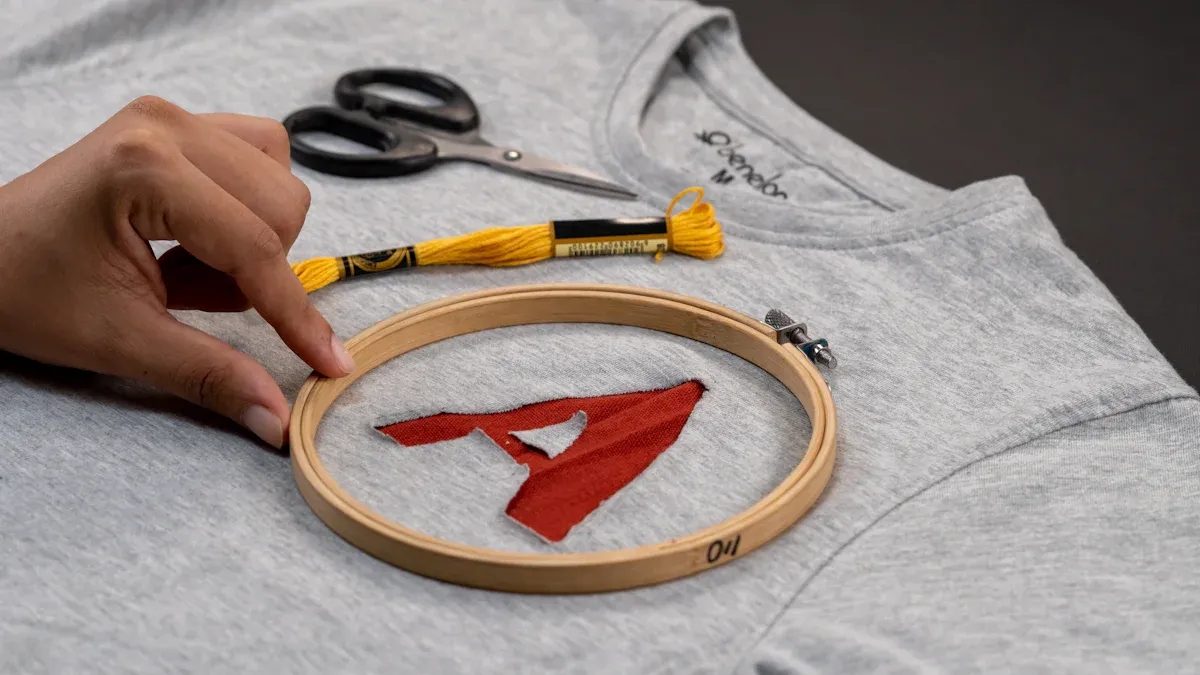
Pinyang Clothing’s team knows good stitching is important. They always get the fabric ready and use hooping. This keeps the fabric flat and tight. It helps the design stay sharp and not move. When the fabric is tight, the embroidery looks neat and lasts longer.
Small, even stitches are best for sweatshirts. These stitches hold the threads in place. They stop the threads from coming loose or snagging. Pinyang Clothing uses machines that control stitch length and direction. This keeps the design smooth and stops rough spots. Rough spots can wear out over time.
Embroidered designs stay nice after many washes. Printed designs can fade and crack. Embroidery keeps your hoodie looking new for years.
Stitch density is very important for sweatshirts. The right amount of stitches keeps the fabric smooth. Too many stitches can make the fabric bunch up. Too few stitches can leave empty spots in the design. Pinyang Clothing checks the fabric and changes the stitch count for each job.
Good stitch density stops puckering and stiffness. This helps hoodies last longer and feel better.
Too many stitches on light or stretchy fabric can cause waves and puckers. This makes the hoodie less strong.
The right stitch density makes hoodies comfy. Comfort is important for people to wear them a lot.
Pinyang Clothing also uses underlay stitching. These hidden stitches support the top threads. They help the design stay flat and keep its shape. The team tests new ways to prepare and hoop fabric. This helps them find the best way to keep embroidery looking great.
Reinforcement and Backing Tips
Backing and reinforcement help sweatshirt embroidery last longer. Pinyang Clothing picks stabilizers based on the fabric and design. They use cutaway stabilizers for sweatshirts. These give strong support and stay in place after washing. For thick or bumpy fabrics, they add a water-soluble topping. This keeps stitches from sinking and helps the design stand out.
The table below shows the best backing for each fabric and design:
Fabric Type
Recommended Backing Methods
Silk or Satin
Use sticky or fusible tear away; for washable silk, use wash away; for non-washable, use soft cut away.
Velvet or Corduroy
Use hoopless methods with sticky stabilizer or fusible tear away; use wash away topping to stop sinking.
Leather or Vinyl
Use tear away stabilizer; adhesive stabilizer helps avoid hooping clamps.
Fleece and Terry
Cut away stabilizer is best; water-soluble topping is good for texture.
High Density Designs
Use heavy cut away or more layers of stabilizer; basting stitches help with big designs.
Small Lettering
Cut away stabilizer is best to keep outlines sharp.
For sweatshirts, Pinyang Clothing often uses fusible interfacing. This layer sticks to the back and adds strength. It helps the embroidery keep its shape and stops stretching. The team also uses basting stitches for big or tricky designs. These stitches hold things in place and are easy to remove later.
Preparation and hooping are important for reinforcement. Pinyang Clothing always checks the hoop tension and fabric before starting. This stops the fabric from slipping and keeps the design in the right spot. Their careful work means every sweatshirt embroidery is strong and looks good.
Pinyang Clothing’s process uses expert techniques, good materials, and careful setup. Their focus on details helps customers enjoy embroidery that stays bright and strong after many washes.
Care and Maintenance for Embroidered Hoodies
Washing and Drying Best Practices
Taking care of embroidered hoodies is important. Start by washing and drying them the right way. Pinyang Clothing says to wash gently and dry with care. This keeps the embroidery looking nice and new. Most experts say cold water is best for washing. Cold water helps the fabric and keeps colors bright. Hot water can hurt the fibers and damage the embroidery.
Here are some simple washing and care steps:
Use a gentle wash cycle with cold or warm water.
Pick a mild detergent. Stay away from strong chemicals that can hurt the embroidery.
Wash hoodies with other soft clothes. Heavy things can rub and wear out the embroidery.
Turn the hoodie inside out before washing. This keeps the design safe from rubbing.
Air drying is the best way to dry hoodies. It helps the embroidery keep its shape and stops shrinking. If you use a dryer, pick a low heat setting. Take the hoodie out while it is still a little damp. This helps protect the fabric and keeps the embroidery soft. Air drying also helps the hoodie keep its size and color.
Tip: Washing gently and air drying can help embroidery last longer.
Storage and Everyday Use Tips
Storing hoodies the right way keeps embroidery bright and neat. Pinyang Clothing says to store hoodies in a cool, dry, and dark place. This stops fading and keeps the fabric strong. Use bags that let air in or acid-free tissue to protect the embroidery. If you fold the hoodie, put tissue between the folds to stop creases.
The table below shows the best ways to store hoodies:
Recommendation
Details
Environment
Store in a cool, dry, and dark place to stop fading and mildew.
Materials
Use bags that breathe and acid-free tissue for more protection.
Hanging vs. Folding
Hang hoodies with shape; use tissue if folding to pad embroidery.
Sunlight and Heat
Keep away from sunlight and high heat.
Wearing hoodies often does not hurt good embroidery. Pinyang Clothing’s hoodies stay strong even after many washes and wears. Still, try not to do rough things that could pull the threads. With good care, embroidered hoodies stay bright and comfy for a long time.
Finishing and Long-Term Care for Embroidery
Special Products and Treatments
Pinyang Clothing’s team says to use the right products. These help embroidery on sweatshirts look neat. Temporary adhesive sprays stick stabilizers to stretchy or light fabric. This stops the fabric from moving while you embroider. Fusible interfacing makes a strong bond and gives more support. It works well for thick designs or thin fabric. These treatments stop the design from getting bent or wrinkled.
Fusible stabilizers also make hooping easier. They stick to the fabric, so both layers move together. You do not need extra glue or basting stitches. Sweatshirts with these treatments stay flat and soft. Custom sweatshirt embroidery looks better with these products. They help when designs are hard or fabric is tricky.
Tip: Use fusible interfacing for hooded sweatshirt embroidery. It keeps the design looking good after many washes.
Quick Fixes for Minor Issues
Small problems can happen with embroidery on sweatshirts. Pinyang Clothing’s experts know how to fix them fast. They use digitizing services to balance stitch density. This stops the fabric from getting stiff or threads from breaking. If there are gaps in the design, they change the density or size of logos. For blurry images, they always ask for vector files to make things clear.
The table below shows common problems and how to fix them:
Issue Type
Problems Encountered
Solutions
Stitch Density
Stiff fabric, gaps, uneven coverage
Balance density, optimize with digitizing
File Preparation
Blurry images, unclear outlines
Provide vector files, share project details
Recurring Design
Complex errors, mismatched stabilizers
Simplify designs, match fabrics and stabilizers
Testing
Poor results before mass production
Test designs before full production
Pinyang Clothing gives after-sales help and customer support for care. Their team helps customers fix embroidery problems and keep sweatshirts looking new. They show users how to finish and care for embroidery. With these tricks, embroidery on sweatshirts stays bright and strong.
Pinyang Clothing’s experts say strong embroidery needs good choices and care. They share these easy tricks for every hoodie:
Method
Steps
Benefits
Hand Washing
Use cold water, gentle soap, and lay flat to dry
Threads rub less, colors stay bright
Machine Washing
Put in a mesh bag, use gentle wash, lay flat to dry
Stops snags, keeps hoodie in shape
Embroidery is tough and lasts a long time. Stitched designs do not wear out fast. This helps clothes look nice and last longer.
If you use good materials and take care, embroidery stays bright. Try Pinyang Clothing’s custom choices to make your own special hoodie.
FAQ
How can someone keep embroidery on hoodies from fading?
Pinyang Clothing says to use colorfast polyester threads. Wash hoodies inside out in cold water. Air drying helps the colors stay bright. Their experts always pick good materials. This keeps embroidery looking nice after many washes.
What is the best way to fix loose embroidery threads?
They say to use a small needle for loose threads. Pull the thread to the back and tie a knot or use fabric glue. Pinyang Clothing’s team can help with quick fixes. This keeps embroidery neat and tidy.
Which stabilizer works best for stretchy hoodie fabrics?
Pinyang Clothing’s team uses cutaway stabilizers for stretchy fabric. This gives strong support and stops designs from moving. For more hold, they add fusible interfacing. This makes embroidery last longer on hoodies.
How often should someone wash embroidered hoodies?
They say to wash only when needed. Use gentle cycles and mild soap to protect the fabric and embroidery. Pinyang Clothing’s experts say washing less often keeps embroidery strong and bright.
Can someone iron over embroidered designs?
Pinyang Clothing says to put a cloth over the embroidery before ironing. Use low heat and do not touch the design with the iron. This keeps threads smooth and safe from damage.
This website uses cookies to provide you with a safer and more personal experience. By accepting, you agree to the Cookie Policy and the use of cookies for advertising and analytics purposes.


 en
en

 Leave a Message